Many product teams use "contract manufacturing" and "EMS" as if they mean the same thing. That mix-up causes real problems: an OEM assumes a general contract shop can handle IPC Class 3 soldering, or expects a quote to include PCB design when it doesn't.
This guide breaks down what each term actually means, how EMS fits inside the broader contract manufacturing world, where OEM responsibilities end and EMS responsibilities begin, and how to evaluate a manufacturing partner before you sign anything.
Key Takeaways
- EMS is contract manufacturing built only for electronics—not a generic outsource shop
- OEMs retain IP and brand; EMS partners run build, test, and quality end to end
- Single-source providers remove handoffs across design, fabrication, and assembly
- Certifications like ISO 13485, AS9100, and ITAR separate qualified partners from generic shops
- Match partner selection to your industry's compliance needs, not price alone
Contract Manufacturing vs. Electronic Manufacturing Services (EMS): Defining the Landscape
What Is Contract Manufacturing (CM)?
Contract manufacturing means hiring an outside firm to produce components, assemblies, or finished products to your specifications instead of building them yourself. It isn't unique to electronics.
- Automakers contract out entire subassembly lines rather than building every part themselves
- Consumer brands like Apple outsource production and focus on design, sales, and marketing
- Apparel, furniture, and packaged goods companies follow the same basic model
The common thread: the OEM owns the design and the brand; the contract manufacturer owns the production floor.
What Is Electronic Manufacturing Services (EMS)?
EMS is contract manufacturing narrowed to one industry: electronics. An EMS provider designs, builds, tests, and services electronic assemblies (PCBs, cable assemblies, finished electronic products) on behalf of OEMs.
You'll also see Electronic Contract Manufacturing (ECM) used interchangeably with EMS in industry publications. There's no formal standards-body distinction between the two; both describe the same outsourced electronics production model.
What separates EMS providers from generic contract shops is depth of service:
- Schematic capture and PCB layout support
- SMT and through-hole assembly lines
- In-house test and inspection equipment
- Formal quality systems tied to IPC and ISO standards
A shop making plastic housings or metal brackets won't have any of that.
How EMS Relates to CM
Every EMS provider is technically a contract manufacturer. Not every contract manufacturer is an EMS provider. That distinction matters when you're vetting partners.
A general fabrication shop can legally call itself a "contract manufacturer" without owning a single SMT line, an IPC-A-610 trained inspector, or a path toward ISO 13485 or AS9100 compliance. Building electronics requires equipment, certifications, and engineering expertise that fall outside general manufacturing.
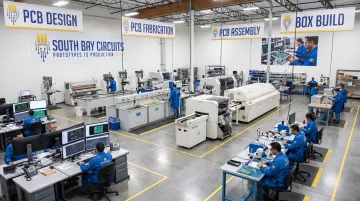
Single-source providers illustrate why this matters in practice. South Bay Circuits (SBC) manages PCB design, fabrication, assembly, and box build under one roof at its 60,000-square-foot Chandler, Arizona facility, rather than splitting the work across three separate vendors. That structure removes the file transfers, shipping delays, and finger-pointing that happen when a board has to travel between companies before it's finished.
EMS vs. OEM: What's the Real Difference?
An OEM (Original Equipment Manufacturer) owns the product: the design, the brand, the intellectual property, and the relationship with the end customer. An OEM doesn't have to manufacture anything itself — Apple designs iPhones but doesn't run the assembly lines.
The EMS provider is the execution partner. It builds the product to the OEM's specifications—the drawings, bill of materials, and quality requirements the OEM provides. The EMS provider doesn't own the brand and typically has no direct relationship with the OEM's end customer.
Who Owns What
| Responsibility | OEM | EMS Provider |
|---|---|---|
| Product design & IP | Yes | No |
| R&D direction | Yes | No |
| Go-to-market strategy | Yes | No |
| Manufacturing infrastructure | No | Yes |
| Process/quality expertise | No | Yes |
| Component sourcing execution | Shared | Yes |
This split is why outsourcing has become the default rather than the exception. IPC's research on the North American EMS industry found the market had only reached about 28% penetration of the total available outsourceable market as of 2018. That leaves plenty of room for OEMs to shift more production to specialized partners as they scale.
Why make the switch? MD+DI's coverage of medical-device outsourcing found that capable EMS partners can stand up new production lines, run final device testing, and support standards compliance, freeing the OEM's engineering team to focus on IP development, clinical trials, and regulatory submissions instead of production logistics.
That's the real value exchange: OEMs give up direct control over manufacturing execution but gain speed, specialized equipment, and quality infrastructure without building it in-house.
Key Services Offered by EMS Providers
Full-service EMS partners cover far more ground than PCB assembly alone.
Design & Engineering Support
Before a board hits a production line, a good EMS partner reviews it for manufacturability:
- DFM/DFT reviews that catch layout issues before they become expensive fabrication problems
- Schematic capture and PCB layout assistance for OEMs without in-house design resources
- Prototyping support to validate a design before committing to volume
SBC folds this review into its standard layout process, checking manufacturing and assembly requirements before a design moves forward. That early check avoids delays from discovering a flaw mid-production.
PCB Fabrication & Assembly
This is the core of any EMS offering: bare-board fabrication plus SMT, through-hole, and mixed-technology assembly, including BGA and fine-pitch placement for dense modern boards.
Turnaround is a real competitive differentiator. Some providers now offer 24-hour fabrication and same-day assembly instead of multi-week timelines.
Box Build & Systems Integration
Beyond the bare board, many EMS providers assemble complete, ready-to-ship products:
- Wiring, cable, and harness work
- Mechanical integration into enclosures
- Final functional testing
Supply Chain Management
Component sourcing is often the biggest scheduling risk in electronics manufacturing. EMS providers typically manage:
- Global component sourcing and turnkey procurement
- Vendor Managed Inventory (VMI), Just-In-Time (JIT), and Kanban programs
- Obsolescence tracking and part substitution planning
Testing & Quality Assurance
Multi-stage inspection catches defects before they reach the customer:
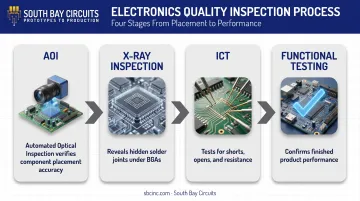
- AOI for placement and assembly accuracy
- X-ray inspection for hidden solder joints under BGAs
- ICT for shorts, opens, and resistance values
- Functional testing to confirm the finished product actually works
Aftermarket & Sustaining Services
Production doesn't end at shipment. Sustaining programs keep a product viable for years after launch:
- Inventory replenishment
- Design refinement and cost-reduction programs
- Volume scaling up or down as demand changes
Strategic Benefits of Partnering with an EMS Provider
Most OEMs cannot match an established EMS partner on capital, speed, or compliance infrastructure. Three advantages show up almost immediately.
Cost efficiency
SMT lines, X-ray inspection systems, and cleanroom-grade assembly space cost millions to build and maintain. Partnering with an EMS provider means using that equipment instead of buying it.
Faster time to market
That same shared infrastructure also compresses the schedule. Running quoting, purchasing, and design review in parallel (instead of one step at a time) can cut weeks off a launch. SBC's NPI process cuts a standard 23-day, 12-stage cycle by 43% by removing queue time between steps.
Access to certifications and regulatory expertise
Speed only matters if the build clears regulated markets. Building an in-house quality system that satisfies ISO 13485, AS9100, or ITAR takes years. Established EMS partners already carry:
- ISO 9001:2015 certification for general quality management
- ISO 13485 compliance for medical-device manufacturing
- AS9100 compliance for aerospace and defense work
- ITAR registration for controlled defense articles
Borrowing that infrastructure rather than building it from scratch is the single biggest reason smaller OEMs choose an EMS partner over expanding their own factory floor.
Industries That Rely on EMS & Contract Manufacturing Partners
Not every sector needs the same level of manufacturing rigor. Three lean on EMS partners the hardest:
Medical and healthcare devices. ISO 13485 compliance and FDA-aligned quality systems aren't optional. Outsourcing penetration in medical device manufacturing has grown from 31% in 2020 to an estimated 38% in 2025. Smaller device companies would rather put capital into clinical validation than build ISO 13485 infrastructure themselves.
Aerospace and defense. AS9100 certification and ITAR registration govern safety-critical, high-reliability electronics. Demand concentrates around partners with trusted domestic supply chains, since defense programs often require U.S.-based manufacturing and controlled handling of technical data.
Automotive, industrial, and instrumentation. These sectors combine ISO/TS 16949 (now IATF 16949) compliance with high-mix, low-volume production needs — a partner has to run short specialty batches and larger volumes without disrupting quality.
SBC supports all three categories from its Chandler facility, with quality processes tied to ISO 9001:2015, ISO 13485 and IATF 16949 compliance, AS9100, ITAR registration, and CMMC Level 1 status for defense-related work.
How to Choose the Right EMS or Contract Manufacturing Partner
Price shouldn't be the first filter. Here's what actually predicts a good long-term fit:
Match certifications to your industry, not general quality claims. A medical device needs ISO 13485-aligned processes; a defense program needs ITAR registration and AS 9100 compliance. Ask for certificate numbers and audit history, not marketing language.
Ask whether design, fabrication, and assembly happen under one roof. Coordinating three vendors means three handoffs. A single-source model, like the one SBC has built over 40+ years in Chandler, Arizona, cuts file transfers, shipping delays, and finger-pointing when a defect shows up.
Check scalability and communication practices. Can the partner support a 50-unit prototype run and a 50,000-unit production order without switching facilities? Do they commit to specific turnaround windows, or just "as soon as possible"?
Verify turnaround claims against your actual calendar. A partner promising fast quoting but taking six weeks to schedule a production run isn't actually faster than a slower-sounding competitor with a tighter schedule.
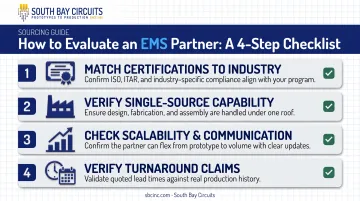
The partner who checks all four boxes will cost more per hour of engineering time, and less over the life of the product.
Frequently Asked Questions
What is EMS in contract manufacturing?
EMS is a specialized branch of contract manufacturing focused solely on designing, building, testing, and servicing electronic assemblies for OEMs. It's contract manufacturing narrowed to one industry.
What is EMS vs OEM?
The OEM owns the product design, brand, and intellectual property. The EMS provider manufactures the product to those specifications without owning the brand or the end-customer relationship.
What's the difference between EMS and ECM (Electronic Contract Manufacturing)?
The terms are largely interchangeable in industry usage, both referring to outsourced electronics production. "EMS" appears more frequently in trade publications and marketing.
What services do EMS providers typically offer beyond PCB assembly?
Full-service EMS partners also provide design support, box build and systems integration, supply chain management (VMI/JIT/Kanban), and sustaining production services after launch.
What industries commonly rely on EMS partners?
Medical, aerospace/defense, automotive, and industrial sectors rely most heavily on EMS partners due to strict compliance demands like ISO 13485, AS9100, and ITAR.
How do I choose the right EMS or contract manufacturing partner?
Prioritize certifications relevant to your industry, single-source capability from design through assembly, and proven turnaround performance — not just the lowest quote.