Introduction
Engineering and procurement teams juggling separate PCB fabricators, component distributors, and assembly houses know the drill: one vendor slips a week, another runs out of parts, and suddenly your six-week schedule stretches into ten.
Cost pressure makes this worse. According to IPC's May 2025 global electronics-manufacturing survey, 65% of manufacturers reported rising material costs, with 41% citing rising labor costs too. Every extra vendor handoff adds friction to an already strained supply chain.
Full turnkey PCB assembly solves this by putting one supplier in charge of the entire job: design review, sourcing, fabrication, assembly, and delivery, so nothing falls through the cracks between companies.
This article covers what full turnkey actually means, what's included, how it stacks up against partial turnkey and consigned assembly, the real benefits, the step-by-step process, and how to pick the right manufacturing partner.
Key Takeaways
- Full turnkey means one supplier sources 100% of your components and owns the build, start to finish.
- It eliminates the "blame game" vendors play over defects and delays.
- DFM/DFA review catches design flaws before production starts, protecting your schedule and budget.
- Partial turnkey and consigned models shift more sourcing burden onto you.
- Providers with in-house fabrication and assembly, like South Bay Circuits, cut queue-and-ship time.
What Is Full Turnkey PCB Assembly?
The Literal Meaning of Turnkey Manufacturing
"Turnkey" means ready for immediate use: hand over the keys, and it's done. Applied to PCB assembly, it means you supply design files and requirements, and the manufacturer hands back a finished, tested board. No chasing parts. No coordinating shipments between facilities.
Why "Full" Means 100% BOM Ownership
The word "full" is doing real work here. Full turnkey specifically means the manufacturer sources and procures 100% of the components and manages the entire Bill of Materials. That's the line that separates it from partial or consigned models, where you still handle some or all of the sourcing.
Full BOM ownership also speeds up quoting. Many providers now run cloud-based platforms tied to live distributor inventories, generating transparent full-BOM pricing in minutes rather than days.
Full Turnkey vs. Traditional Multi-Vendor Manufacturing
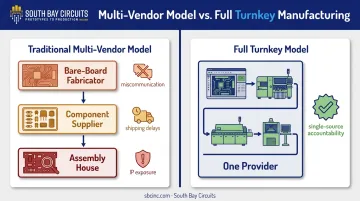
The traditional model splits your project across three separate businesses: a bare-board fabricator, a component supplier, and an assembly house. Each handoff introduces risk:
- Miscommunication between vendors over spec changes
- Shipping delays as boards and parts move between locations
- IP exposure every time design files leave your control
Full turnkey collapses all three into one point of contact. That creates single-source accountability — when one provider owns the entire process, there's no blame game between vendors if a defect shows up. One company owns the process, and one team resolves any issue that comes up.
What's Included in a Full Turnkey PCB Assembly Service
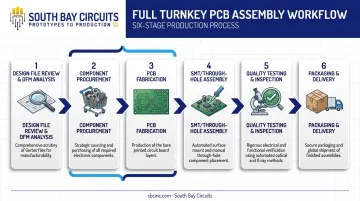
A genuine full turnkey package covers six core stages: engineering/DFM-DFA review, BOM management and sourcing, PCB fabrication, SMT/THT assembly, testing and inspection, and final packaging and logistics. Fabrication, assembly, and testing follow standard workflows; the breakdown below focuses on where full turnkey adds the most value.
DFM/DFA Review Catches Problems Before Production
Before a single board gets built, a proper Design for Manufacturability/Assembly review typically flags:
- Footprint mismatches between the layout and actual component packages
- Incorrect polarity markings on diodes, electrolytic capacitors, and ICs
- Insufficient spacing between fine-pitch components
- Part lifecycle risks, meaning components nearing end-of-life or with limited availability
The Global Electronics Association notes that catching these issues through DFM, DFT, and DFA review helps designs save time and cost while performing as intended in production. Catching a footprint error at review is a five-minute fix. Catching it after 500 boards are populated is a very different conversation.
Component Sourcing and BOM Management
This is where full turnkey earns its keep. Instead of you chasing individual distributors, the manufacturer draws on existing relationships to buy in volume, often at better pricing than a single-project purchase order could command.
Lead times remain a moving target. ECIA's market trends tracker monitors current lead times across semiconductor, passive, and electromechanical categories weekly, and conditions shift often enough that pricing quoted a month ago may no longer hold. A provider with active distributor accounts can adjust sourcing strategy faster than a team managing this part-time alongside its actual job.
Value-Added Services Beyond the Bare Board
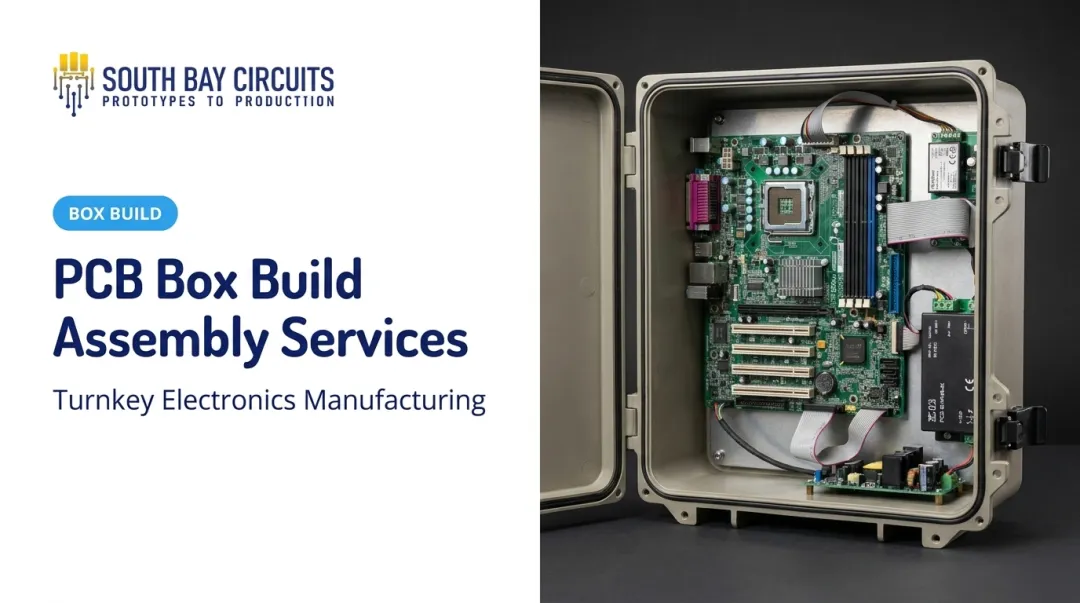
Full turnkey often extends past the assembled PCB itself. Box build and system integration, where the finished board gets installed into an enclosure with wiring, connectors, and subassemblies, is a common bundled offering among established contract manufacturers. South Bay Circuits, for example, keeps box build in-house at its Chandler, Arizona facility, so assemblies move directly into enclosure integration without a separate vendor handoff.
Cable and harness assembly frequently rides alongside it for customers building complete electromechanical systems rather than standalone boards.
Post-Production Support
Some full turnkey partners push support further still, offering inventory management for repeat-order customers, drop-ship fulfillment direct to your end customer, and after-sales support if a field issue traces back to the board. Not every provider offers all three, so confirm what's actually included before you sign.
Full Turnkey vs. Partial Turnkey vs. Consigned Assembly
Not every project needs, or wants, full BOM ownership handed to the manufacturer. Two other models split the work differently.
Partial turnkey splits component sourcing between you and the manufacturer. You might supply hard-to-find or long-lead parts while the assembler procures everything else. It's a middle ground for teams with existing supplier relationships they don't want to abandon.
Consigned assembly flips it further: you supply 100% of the components, and the manufacturer only handles assembly and testing. You own every sourcing decision, along with the shortage risks and excess-inventory costs that come with it.
| Factor | Full Turnkey | Partial Turnkey | Consigned Assembly |
|---|---|---|---|
| Component Sourcing | Manufacturer sources 100% | Split between customer and manufacturer | Customer sources 100% |
| Ideal Use Case | Fastest, lowest-touch production | Existing supplier contracts or special-source parts | Companies with established procurement teams |
| Pros | Single point of contact, faster cycle time, less admin burden | Retains some sourcing control while offloading complexity | Maximum control over part selection and cost |
| Cons | Less direct control over specific vendor selection | Requires coordination on split responsibilities | Customer absorbs shortage risk and sourcing delays |
Full turnkey works best when speed matters more than retaining sourcing control, which is why South Bay Circuits builds its process around it for OEM and defense-program customers who need to move fast without adding procurement headcount.
Key Benefits of Full Turnkey PCB Assembly
Fewer Handoffs, Fewer Miscommunications
One contact means one version of the truth. Spec changes, revision updates, and shipping schedules don't get lost in translation between three separate companies.
Cost Efficiencies Through Bulk Purchasing
Established manufacturers buy components across many customer projects at once, which typically translates into better per-unit pricing than a standalone purchase order. Lower administrative overhead and simplified purchase-order management, without juggling multiple vendors, add up too.
Early Issue Detection Shortens NPI Cycles
Catching a footprint error or a polarity mistake during DFM review, rather than after boards are populated, avoids a redesign-and-respin cycle. That directly compresses New Product Introduction (NPI) and New Product Development (NPD) timelines.
Faster Time-to-Market Under One Roof
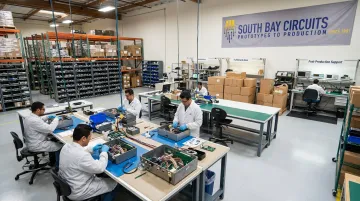
When fabrication, assembly, and testing happen at the same facility, there's no queue-and-ship time between separate vendors. South Bay Circuits, for example, runs PCB fabrication in as little as 24 hours with same-day assembly available from its Chandler, Arizona facility. This integrated setup compresses total cycle time rather than just shortening one stage of it.
Scalability Without Vendor Renegotiation
A full turnkey partner can flex from a handful of prototype boards to a high-volume production run without you having to find, vet, and onboard a new vendor. Tooling, stencils, fixtures, and test programs typically get paid for once, even if volume later shifts from a domestic quick-turn run to an offshore production line.
The Full Turnkey PCB Assembly Process: From Design to Delivery
The full turnkey workflow moves through distinct phases, each building on the last:
- Design file review and DFM analysis: Engineers check your Gerbers and BOM against manufacturability rules, flagging issues before placing any orders.
- Component procurement: Once you finalize the BOM, sourcing begins against the confirmed part list, not a preliminary guess.
- PCB fabrication: The bare board takes shape to spec while components are already inbound.
- SMT and through-hole assembly: Automated pick-and-place places surface-mount components, then reflow soldering secures them; through-hole parts go through wave soldering or selective soldering as needed.
- Quality testing and inspection: Automated Optical Inspection (AOI), X-ray for hidden solder joints like BGAs, In-Circuit Testing (ICT), and functional testing confirm the board performs as designed.
- Packaging, shipment, and after-sales support: Packaging protects boards from ESD and shipping damage before delivery, with support available if questions come up post-delivery.
Running steps 2 and 3 concurrently, rather than sequentially, is one of the simplest ways a turnkey provider shaves days off a schedule. At South Bay Circuits, ordering parts while the bare board is still in fabrication is standard practice, not an exception.
How to Choose the Right Full Turnkey PCB Assembly Partner
Match Certifications to Your End Market
Not every certification matters for every project. Check for:
- ISO 9001:2015 for general quality management
- AS9100D for aerospace and defense work
- ISO 13485:2016 for medical device electronics
- IATF 16949:2016 for automotive production
A certificate that doesn't match the facility building your board isn't worth much. Verify the scope and site address on the certification itself.
Evaluate In-House vs. Outsourced Capability
The more of the process handled under one roof, the fewer handoffs required. Fewer handoffs typically mean faster turnaround and tighter quality control.
South Bay Circuits illustrates the point. The company's 60,000+ square foot Chandler facility handles design through production under one roof, drawing on over 40 years of industry experience. That in-house control eliminates the queue-and-ship time that piles up between separate fabrication and assembly vendors.
Ask the Right Questions Upfront
Before committing, ask prospective partners:
- What's your typical lead time for prototype versus production quantities?
- How flexible is your prototyping process if I need design changes mid-run?
- Do you source domestically, offshore, or both, and how does that affect cost and timeline?
Matching these answers against your project's urgency and budget prevents surprises once production is already underway.
Frequently Asked Questions
What is turnkey PCB assembly?
Turnkey PCB assembly is an end-to-end manufacturing solution where one supplier handles component sourcing, fabrication, assembly, and testing based on your design files. You submit requirements and receive a finished board.
What is the difference between full turnkey and partial turnkey PCB assembly?
Full turnkey means the manufacturer sources all components and owns the entire BOM. Partial turnkey splits sourcing responsibility, with you supplying some parts and the manufacturer handling the rest.
What files are required to start a full turnkey PCB assembly project?
Most projects require Gerber files, a complete Bill of Materials, and pick-and-place (centroid) files, plus any special assembly instructions. Exact requirements vary by manufacturer, so confirm their intake checklist first.
Is full turnkey PCB assembly more expensive than partial turnkey?
Upfront quotes can look similar or slightly higher for full turnkey. However, it often reduces hidden costs tied to procurement delays, sourcing errors, and the administrative time of managing vendors yourself.
Can full turnkey PCB assembly handle low-volume prototype orders?
Yes. Most full turnkey providers support prototype quantities and can scale the same design into full production runs without switching vendors or renegotiating tooling costs.
What industries commonly use full turnkey PCB assembly services?
Aerospace and defense, medical devices, automotive, and industrial instrumentation sectors commonly rely on full turnkey manufacturing. These industries require certified, reliable single-source production with tight traceability.